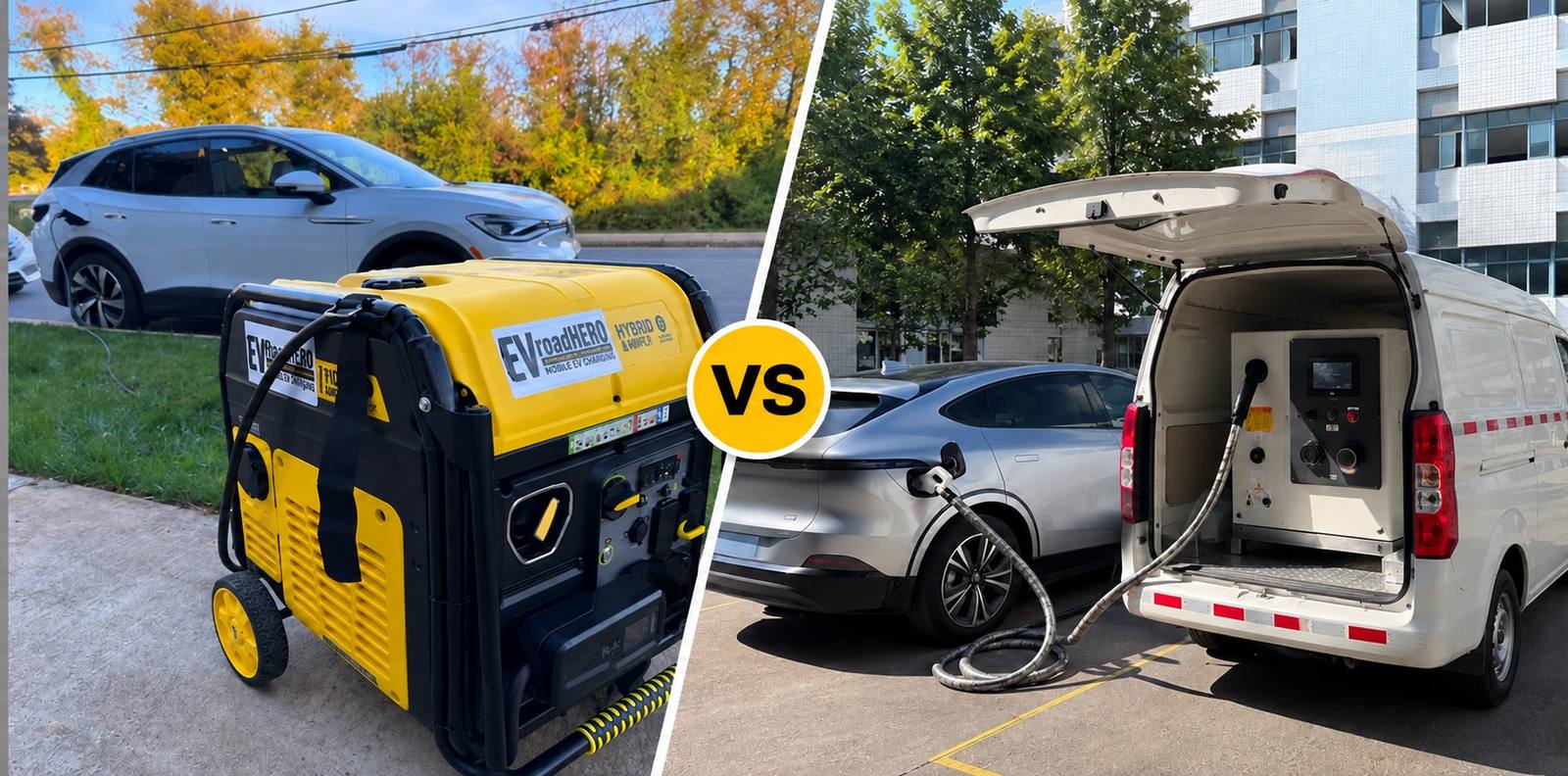
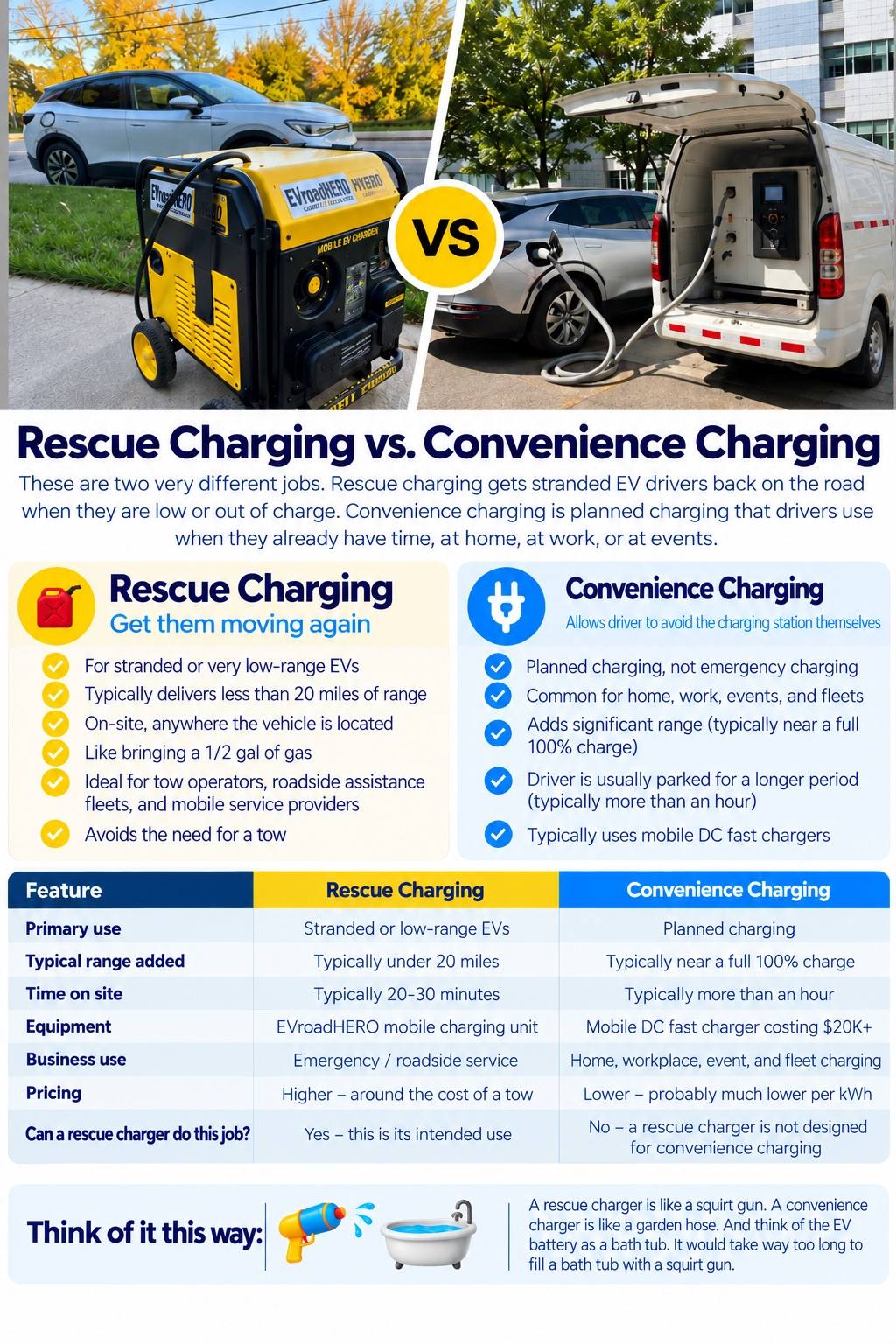
These are two very different jobs. Rescue charging gets stranded EV drivers back on the road when they are low or out of charge. Convenience charging is planned charging that drivers use when they already have time, at home, at work, or at events.
Primary useRescue: Stranded or low-range EVsConvenience: Planned charging
Typical range addedRescue: Typically under 20 milesConvenience: Typically near a full 100% charge
Time on siteRescue: Typically 20–30 minutesConvenience: Typically more than an hour
EquipmentRescue: EVroadHERO mobile charging unitConvenience: Mobile DC fast charger costing $20K+
Business useRescue: Emergency / roadside serviceConvenience: Home, workplace, event, and fleet charging
PricingRescue: Higher — around the cost of a towConvenience: Lower — probably much lower per kWh
Can a rescue charger do this job?Rescue: Yes — this is its intended useConvenience: No — a rescue charger is not designed for convenience charging