

Power / Charging Speed
How quickly can the equipment deliver energy?
Understand the key terms, how EV charging works, and what matters when choosing mobile charging equipment.
When evaluating mobile EV charging equipment, there are four key factors. They are all connected, and there are tradeoffs.
How quickly can the equipment deliver energy?

How much energy can the system deliver before it needs fuel or recharging?

What does the equipment cost to buy and operate?

How practical is it to move, load, unload and use roadside?
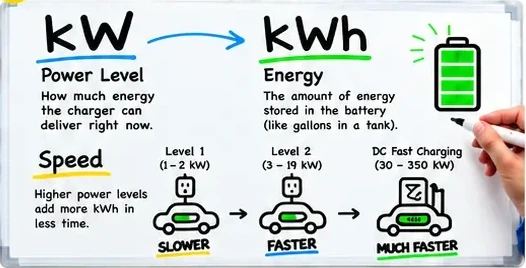
EVs can be charged at different power levels. Each level is used for different situations.
| Level 1 (AC) | Level 2 (AC) | DC Fast Charging (DC) | |
|---|---|---|---|
| Typical supply | 120 V AC | 208/240 V AC | High-voltage DC |
| Typical power | ~1–2 kW | ~3–19 kW | ~30 kW to 350+ kW |
| Relative speed | Slow | Faster | Fastest (potential) |
| Typical use | Home (long dwell) | Home, commercial, workplace | Highway, commercial, fleet |
The charger offers a maximum available power, but the EV decides how much it will actually accept at any moment. Charging speed can vary based on battery state of charge, battery temperature, vehicle limitations and ambient conditions.

An EV near 0% may initially limit charging power to protect the battery — especially when it is very hot or very cold. A high-speed DC charger can also charge slowly under these conditions because the EV, not the charger, controls how much power it accepts.
Low total harmonic distortion (THD). Smooth, stable power that is ideal for EV charging. EVroadHERO’s inverter delivers THD below 3%.
Higher THD can cause charging problems or prevent charging.
THD = Total Harmonic Distortion. A lower THD means a cleaner, smoother waveform. Conventional generators can have much higher THD, which can cause issues with sensitive onboard EV chargers and other controlled equipment.
| Charger power | Estimated time to add 5–10 miles | Typical use |
|---|---|---|
| 9 kW (Level 2) | ~20 minutes | Mobile rescue charging (EVroadHERO) |
| 11.5 kW (Level 2) | ~15 minutes | Higher-power Level 2 |
| 30 kW (DC fast) | ~5–10 minutes | Mobile or public DC |
| 60 kW (DC fast) | ~3–5 minutes | Higher-power DC |
*Estimated time to add 5–10 miles of range assumes a typical EV (for example, a Tesla Model 3/Y), normal ambient conditions, and that the EV accepts the full charger output.
Mobile charging systems store or supply energy in different ways.
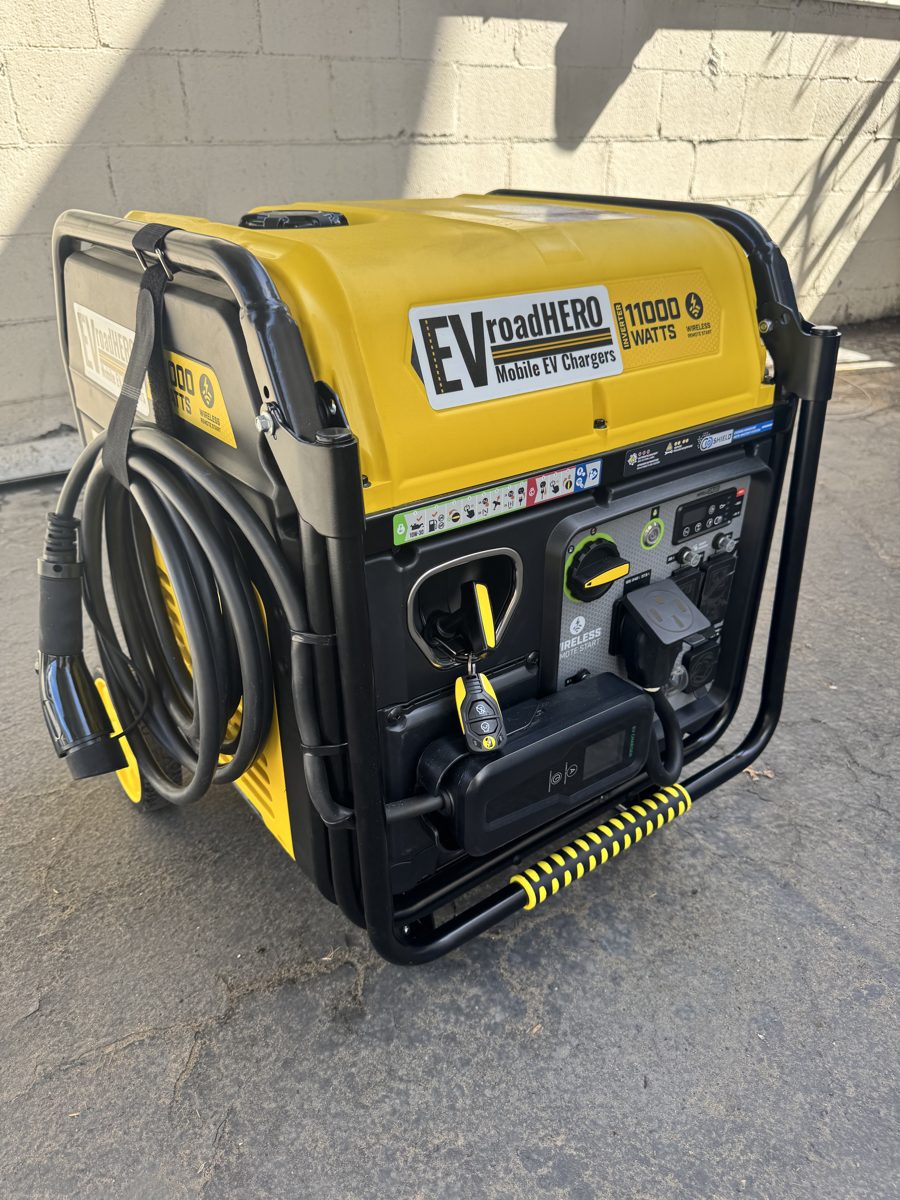

A 60 kWh mobile DC system can deliver roughly 90% of a Chevrolet Bolt EV’s battery (66 kWh), providing a meaningful boost when drivers need it most.

Equipment cost increases significantly with higher power and capacity.
More power and more capacity usually mean larger, heavier equipment.
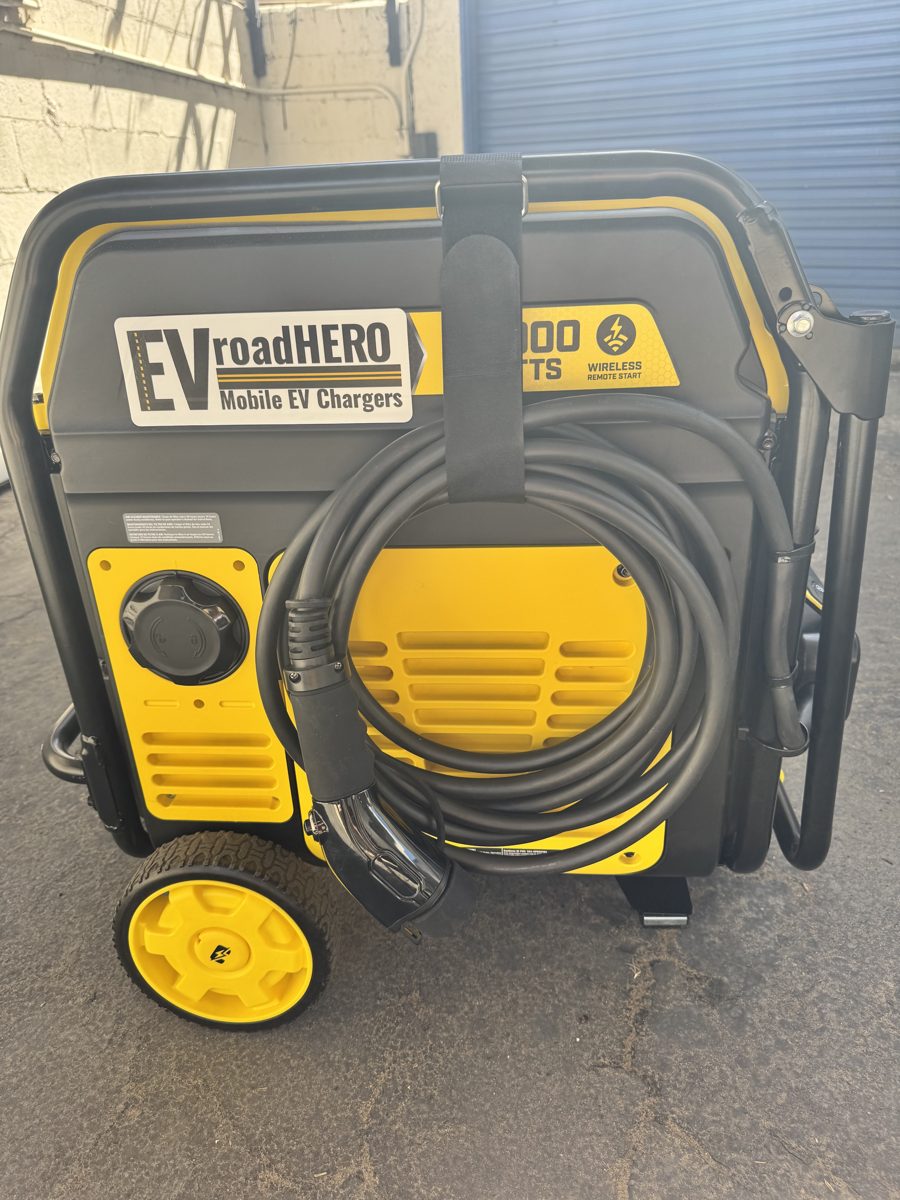
Now that you understand the basics, learn how rescue charging and convenience charging differ, and which type of equipment is right for your situation.